
Sea Bass in the Norfolk Broads: The Saltwater Predator Moving Inland
- Online Instructor

- May 8
- 7 min read
For many anglers, the Norfolk Broads are still thought of as classic coarse-fishing country: roach, rudd, bream, perch, pike and eels. But in recent years, another fish has been creating a real buzz among those willing to experiment and explore: the European sea bass.
Bass in the Broads are not entirely new. They have been present around the lower tidal system for a long time, especially around Breydon Water and the last few miles of rivers Yare, Bure and Waveney. What does seem to have changed is the frequency, spread and size of fish being reported. Pioneering anglers have been quietly catching them for a few years, and the pattern suggests that the saltwater influence — and the fish that follow it — may be pushing further inland than many anglers expected.
Breydon Water: a bass nursery on the doorstep
Breydon Water is not just a convenient gateway between the Broads and the sea. It is an ecologically important estuary. Eastern IFCA’s 2014 finfish research report noted that Breydon Water showed a “disproportionately high abundance of bass” in Environment Agency Water Framework Directive sampling, with a tendency towards larger juvenile fish, and is considered important as a nursery area for Bass.

The estuary acts as a sheltered feeding and growing area for young bass before they move out towards the coastline and join the wider adult population.
Many East Coast beach anglers will have experienced periods when small bass suddenly seem abundant, as young fish leave Breydon and spread out along the nearby beaches.
We know that bass are established in the lower estuary system, it should not surprise us that some continue to push into the connected tidal rivers and, at times, further into the Broads.
Why are more bass showing up now?
There are lots of theories, and it is unlikely to be one single reason. Warmer water, changing salinity patterns, prey movement, strong year classes, void left by declining pike populations and changes in habitat use may all play a part.

Bass distribution is strongly linked to estuaries, salinity and temperature. Cefas notes that sea bass larvae arrive near nursery grounds such as estuaries, saltmarshes and sheltered coastal sites, and that the distribution of bass in estuaries is related to salinity and depth. Eastern IFCA also highlighted the importance of seawater temperature in bass distribution, especially in juvenile stages.
On the Broads, many anglers are observing what feels like a shifting boundary: the transition zone between saltwater, brackish water and freshwater seems to be reaching further inland at times. Bass are well suited to exploit that.
But bass are sea fish — how can they survive in freshwater?
Bass are what biologists call euryhaline fish. That means they can tolerate a widre range of salinities than most fish species. Salmon, sea trout, mullet, smelt, eels and flounder also show this ability to varying degrees.
In seawater, a bass is surrounded by salty water, so water naturally wants to leave its body. To cope, the fish drinks seawater and gets rid of excess salts through its gills and kidneys.
In freshwater, the problem reverses. Water wants to enter the fish’s body, and salts can be lost. The fish drinks far less, produces more dilute urine, and uses its gills to manage salts.
That ability to switch its internal “water and salt controls” is what allows bass to move between sea, estuary, brackish river and freshwater-influenced areas. It does not mean every bass will live anywhere, all year round, but it does explain why they can turn up surprisingly far from the open coast.

A new predator in the Broads food chain
One of the most exciting parts of this story is the average size of the bass being caught. These are not generally tiny school bass. Most are proper adult fish, and a bass of that size is an efficient predator.
In the Broads, a large bass is likely to find plenty of food. Shoals of roach and rudd, small bream, perch fry, smelt, shrimp, crabs, and small estuary fish may all be on the menu depending on where the fish is feeding. For anglers, that makes them a thrilling addition to the fishery. They are fast, powerful, highly mobile, and very different from the traditional freshwater species most Broads anglers are targeting.
Sport fish, not table fish
Although sea bass have a well-earned reputation as a table fish when caught from clean, open-coast marks, fish that spend time in brackish or freshwater-influenced areas are often less appealing to eat. Many anglers find that bass from these environments do not have the same clean flavour as fish taken from surf beaches, reefs or clear tidal water.
More importantly, bass are slow-growing, hard-fighting sport fish, and a large bass in the Broads is a special capture. In a fishery that is still developing, these fish are far more valuable alive than on a plate.
For that reason, Broads bass are best treated as a sport fish. Handle them carefully, keep them out of the water for the shortest possible time, take a quick photograph if needed, and return them strongly. Catch and release gives this exciting new part of the Broads fishery the best chance to grow.
When Can I fish for Broads Bass?
Bass are not currently year-round residents in the Broads. They tend to arrive around April and depart again in the autumn, which means their season overlaps with the traditional Broads coarse fishing close season.
The coarse fish close season applies to rivers, streams, drains and waterways in England from 15 March to 15 June inclusive, during which anglers cannot fish for coarse fish. The Environment Agency’s guidance makes this clear, and describes the close season as a period designed to protect freshwater fish during their spawning period.
Under the Salmon and Freshwater Fisheries Act 1975, “freshwater fish” are defined as fish that habitually live in fresh water, but the Act also includes salmon, trout, eels, lampreys, smelt, and other fish that migrate between fresh and salt water to spawn.
Sea bass are not coarse fish and they do not spawn in freshwater, they unquestionably a marine species be every definition. Therefore they are not managed in the same way as roach, bream, rudd or perch under coarse-fishing close-season rules. Bass are instead subject to marine fisheries management and national bass regulations, with local enforcement and guidance from the Inshore Fisheries and Conservation Authority, or IFCA.
The practical issue for anglers is intent. If you are fishing for Bass in freshwater during the coarse fish close season, you need to be able to clearly demonstrate that you are targeting them and not coarse fish. This means using methods, baits and tackle that are selective for bass, rather than tactics that could reasonably be seen as targeting species such as pike, perch, roach, rudd or bream.
A useful comparison is salmon or sea trout fishing during the coarse close season. Anglers may legally target game fish, but methods can be restricted, because some baits and tactics would also catch coarse fish. The EA website gives examples of game fishing during the coarse close season and notes that permitted lures and baits vary by area.
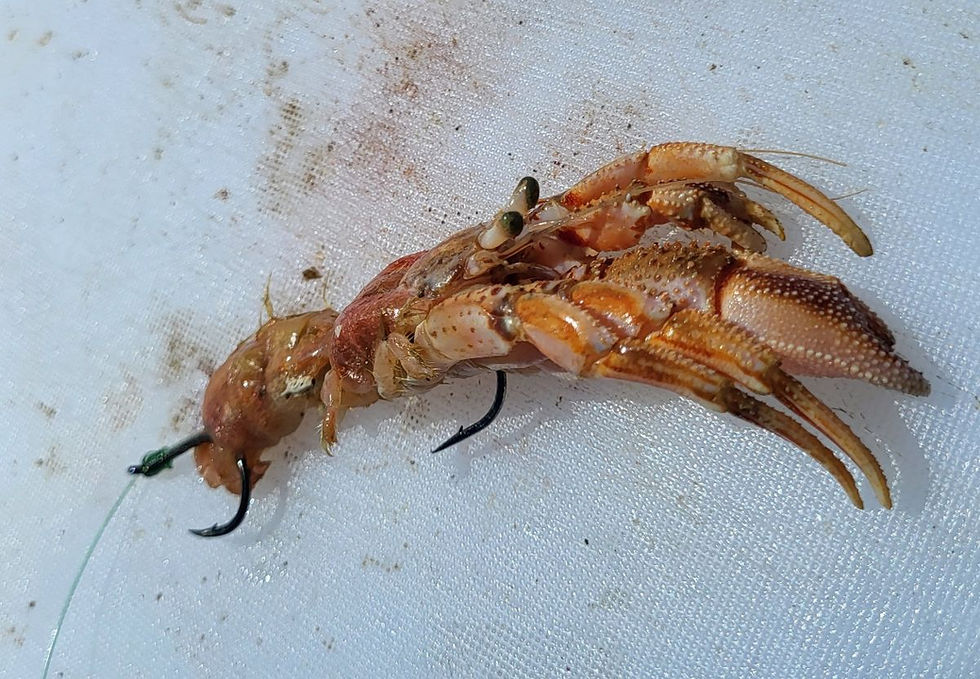
For a Broads bass angler, that means the safest approach is to use methods that clearly select for bass and avoid coarse fish. Lures or livebaits could be difficult to justify because they may also catch pike or perch. By contrast, heavier hooklinks, larger sea hooks, and baits such as crab, squid or lugworm are very unlikely to be taken by roach, rudd or bream, and they help demonstrate that bass are the intended target.
This is not legal advice, and interpretation of law always matters. Anyone planning to fish during the coarse close season should check the latest Environment Agency rules, local byelaws, fishery permissions and relevant IFCA/MMO bass regulations before fishing. The Environment Agency publishes a list of points below which certain rivers are open for all fishing, all year round. Some anglers may prefer the absolute clarity of fishing downstream of these locations, where demonstrating intent will not be an issue. The GPS coordinates for these points can be found here.
How might you target them?
The Broads bass fishery is still developing, so watercraft matters more than following a fixed recipe. Look for tidal movement, baitfish activity, colour changes, salinity influence, and areas where channels, boat traffic, mudflats or structure create ambush points.
For bait fishing, sea baits make the most sense: peeler crab, squid strips, prawns or fish baits. Strong hooklinks are sensible because bass have rough mouths and may be caught around weed, snags or tidal debris. Hooks should be large enough to avoid small coarse fish and to suit the bait being used.
Once the coarse fishing closed season has ended, livebaits and, in clearer sections of water, lures can become very effective methods for targeting bass. However, anglers should be mindful of avoiding areas likely to hold numbers of pike, as pike do not cope well with being caught and handled in the warm Broads water during summer.
The key is to fish like a sea angler who understands freshwater rules, not like a coarse angler hoping a bass comes along.
An exciting addition to the Norfolk Broads
Sea bass in the Norfolk Broads are a fascinating reminder of just how dynamic this system really is. The Broads are not a simple freshwater fishery; they are part of a living, ever-changing tidal landscape, connected to the sea by an ancient estuary, where bass are free to move in and out as conditions suit them.
For anglers, bass offer something genuinely exciting: a powerful, hard-fighting sport fish in an unexpected setting. The opportunity now is to enjoy them in the right way. That means understanding the law, respecting the coarse fish close season, using selective methods, handling fish carefully, and treating Broads bass as a special sport-fishing opportunity rather than simply something for the table.
For anyone new to this style of fishing, an excellent day out can be had under the expert guidance of Sam Cox, who offers a professional guiding service for these remarkable predators. You can book with Sam here Services | samcoxangling


Comments